Custard Halwa Recipe, karachi Halwa Recipe / Bombay Halwa Recipe

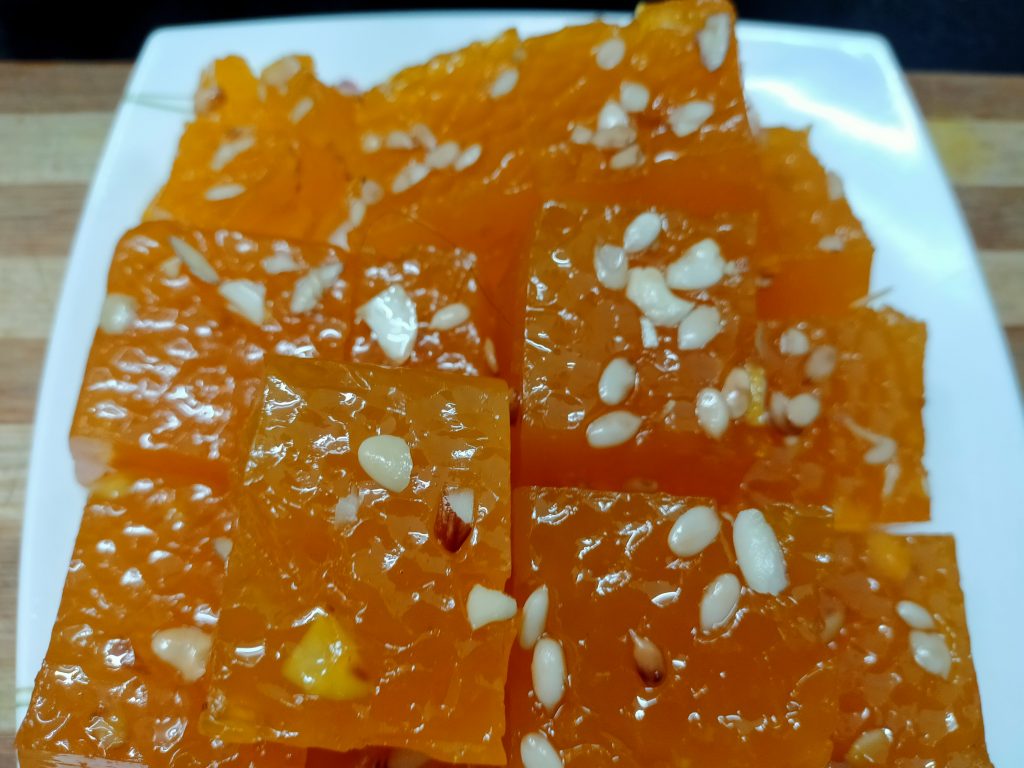
Karachi Halwa, also known as Bombay Halwa, is a popular Indian sweet delicacy characterized by its chewy texture and rich flavors. Made primarily from corn flour, sugar, and ghee (clarified butter), this sweet treat is often embellished with chopped nuts and flavored with cardamom and saffron. The process involves roasting the corn flour until golden brown, preparing a sugar syrup, and then combining the two to form a thick, sticky mixture. After adding nuts and flavorings, the halwa is set in a tray, cooled, and cut into pieces. Karachi Halwa delights taste buds with its irresistible sweetness and nutty richness, making it a beloved dessert enjoyed on various festive occasions and special gatherings.
RECIPE
Here’s a detailed step-by-step recipe for Karachi Halwa, also known as Bombay Halwa:
Ingredients:
– 1 cup corn flour
– 1 ½ cups sugar
– 1 ½ cups water
– 1 cup ghee (clarified butter)
– ¼ cup chopped mixed nuts (cashews, almonds, pistachios)
– ¼ teaspoon cardamom powder
– A pinch of saffron strands (optional)
– Food coloring (red or orange, optional)
Instructions:
1. Grease a shallow tray or plate with a little ghee and set it aside. This will be used to set the halwa later.
2. In a small bowl, soak the saffron strands in a tablespoon of warm water. This step is optional but adds a nice aroma and color to the halwa.
3. Heat a heavy-bottomed pan or kadhai on medium heat. Add ghee to the pan and let it melt completely.
4. Once the ghee is hot, add the chopped nuts to it and roast them until they turn golden brown. Make sure not to burn them. Once done, remove them from the ghee and set them aside.
5. In the same pan with the remaining ghee, add corn flour and roast it on low heat. Keep stirring continuously to avoid any lumps and ensure even roasting. Roast until the corn flour turns light golden brown and you can smell a nutty aroma. This process may take around 10-15 minutes.
6. In a separate saucepan, combine water and sugar. Bring it to a boil over medium heat, stirring continuously until the sugar dissolves completely. Let it simmer for a few minutes until you get a slightly thick syrup consistency. You don’t need to check for any string consistency here.
7. Once the sugar syrup is ready, carefully pour it into the roasted corn flour mixture, stirring continuously to avoid lumps. Be cautious as the mixture may splutter.
8. Add the soaked saffron along with the water it was soaked in to the mixture. Also, add cardamom powder for flavor.
9. Keep stirring the mixture continuously over low heat until it thickens and starts leaving the sides of the pan. This may take around 15-20 minutes.
10. At this stage, if you wish to add food coloring for a vibrant look, divide the halwa mixture into two parts and add a few drops of food coloring to each part. Mix well.
11. Once the halwa reaches a thick consistency and starts pulling away from the sides of the pan, add the roasted nuts and mix well.
12. Quickly transfer the hot halwa mixture to the greased tray or plate. Using a spatula or greased hands, spread it evenly and smoothen the surface.
13. Allow the halwa to cool down and set at room temperature for a few hours or until completely set.
14. Once set, cut the halwa into desired shapes using a sharp knife. You can garnish with additional chopped nuts if desired.
15. Your Karachi Halwa or Bombay Halwa is ready to be served. Enjoy the delicious sweet treat with your family and friends!
Note: Store the leftover halwa in an airtight container at room temperature for up to a week.
TO WATCH THIS RECIPE on YOUTUBE (Bengali)….
HISTORY OF Custard Halwa Recipe, karachi Halwa Recipe / Bombay Halwa Recipe
The history of Karachi Halwa, also known as Bombay Halwa, is deeply rooted in the culinary traditions of the Indian subcontinent. While the exact origins of this delectable sweet are not well-documented, it is believed to have originated in the Indian city of Bombay (now Mumbai) or Karachi, Pakistan.
Halwa, a traditional dessert in South Asia and the Middle East, has been enjoyed for centuries. It is made in various forms using ingredients such as flour, sugar, ghee, and nuts. The technique of making halwa has evolved over time, with regional variations and adaptations.
The recipe for Karachi Halwa likely emerged through the cultural exchange between different communities in Bombay and Karachi. These bustling cities have historically been melting pots of diverse cultures, where culinary influences from various regions of India and beyond converge.
Karachi Halwa gained popularity not only in India and Pakistan but also among the Indian diaspora around the world. Its chewy texture, rich flavors, and colorful appearance made it a favorite sweet for festivals, celebrations, and special occasions.
Over the years, Karachi Halwa has become a staple in Indian sweet shops, where it is often sold alongside other traditional confections. With the passage of time, modern variations of the recipe have emerged, incorporating different ingredients and flavors to suit contemporary tastes.
Today, Karachi Halwa continues to hold a special place in the hearts of sweet enthusiasts, serving as a reminder of the rich culinary heritage of the Indian subcontinent and the cultural exchanges that have shaped its diverse cuisine.